



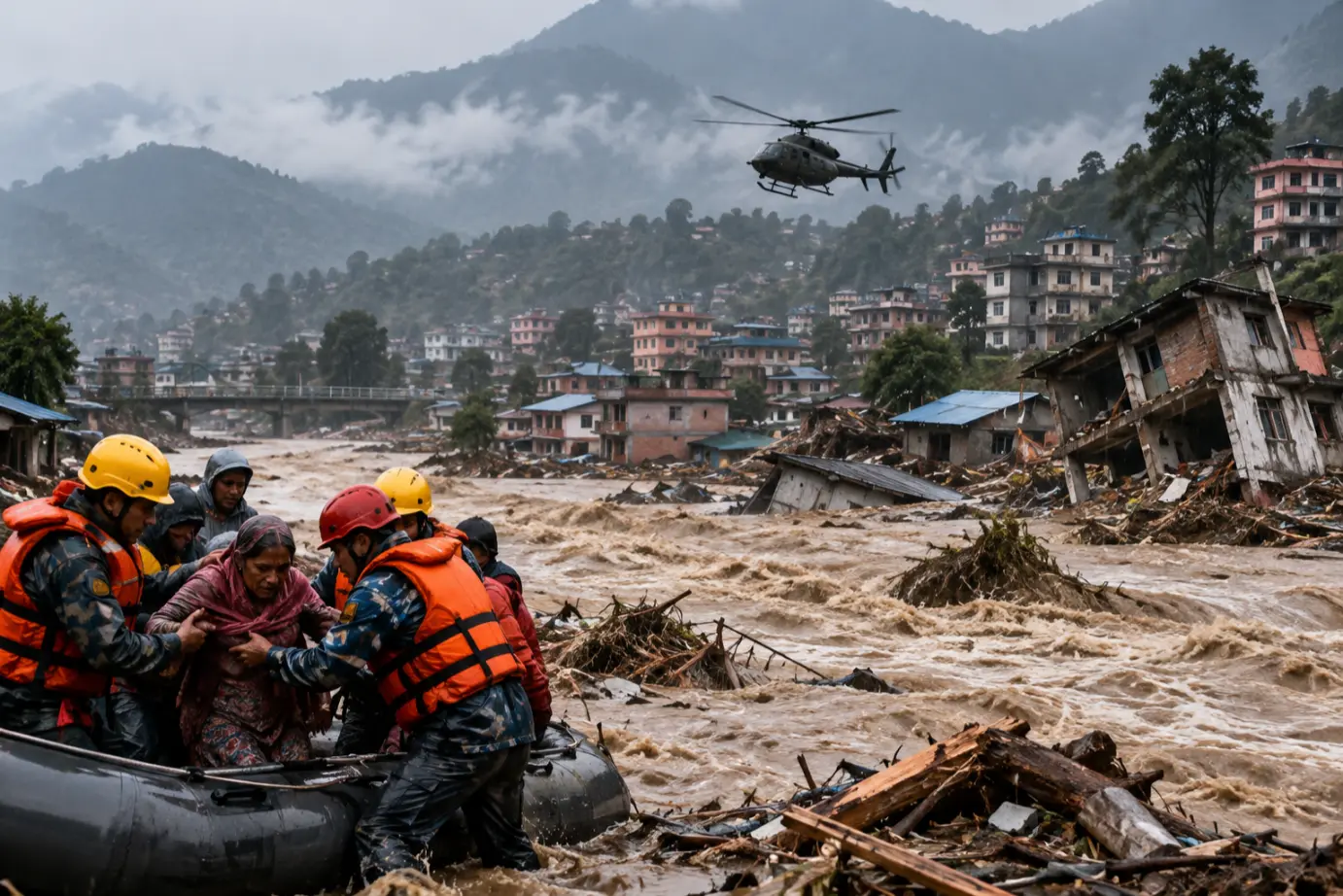
Nepal says major greenhouse gas emitters must take responsibility as catastrophic floods kill more than 1,000 people and leave thousands missing
Kathmandu: Nepal has stepped up its demand for climate compensation from India, China and the United States following devastating floods that have killed more than 1,000 people and left thousands missing.
Nepal’s Foreign Minister Shisir Khanal said the country is seeking greater accountability from some of the world’s biggest greenhouse gas emitters, arguing that smaller and more vulnerable nations are being forced to bear the consequences of climate change despite contributing relatively little to global emissions.
Khanal told Kantipur TV that China, the US and India have made “extremely large” contributions to climate change while countries such as Nepal are being left to deal with its consequences.
Nepal Calls For Climate Justice, Not Charity
The demand comes after devastating flash floods struck Nepal on August 26, with the disaster linked to a collapse involving glacial ice and rock in the Himalayan region. The floods caused widespread destruction, damaged infrastructure and severely disrupted communities.
Nepal’s government has framed its appeal as a question of climate justice, rather than a request for conventional humanitarian assistance.
The argument reflects a wider debate among vulnerable developing countries over who should pay for the growing economic and human costs of climate-related disasters. Nepal contributes only a tiny share of global greenhouse gas emissions but faces significant risks because of its geography and rapidly changing Himalayan climate.
The recent disaster has intensified concerns over the vulnerability of Himalayan communities to extreme weather events, melting glaciers and other climate-related hazards.
More Than 1,000 Dead, Thousands Still Missing
The scale of the disaster has added urgency to Nepal’s demand. More than 1,000 people have been reported dead, while thousands remain missing. Rescue teams have been working in difficult terrain, with damaged roads, bridges and communications making access to affected areas particularly challenging.
India and China have both provided assistance as rescue and relief operations continue. Helicopters, equipment and emergency teams have been deployed to help reach isolated areas and support recovery efforts.
The floods have also inflicted serious damage on Nepal’s infrastructure and energy sector. According to Reuters, hundreds of megawatts of hydropower capacity have been affected, highlighting the economic consequences of extreme weather for a country increasingly dependent on hydropower.
Nepal Wants Wealthier Nations To Pay For Climate Losses
Nepal’s position comes as developing countries continue to push for greater access to international loss-and-damage funding. The concept is designed to provide financial support to countries facing irreversible economic and non-economic losses caused by climate change.
The Himalayan nation is now seeking to place its devastating floods within that broader global framework.
For Nepal, the latest catastrophe has become more than a national disaster. It has reignited a difficult international question: who should bear the financial burden when countries that contribute relatively little to climate change suffer some of its most devastating consequences?
As Nepal begins the long process of rescue, rehabilitation and reconstruction, its call for climate compensation from major emitters could add fresh pressure to an already contentious global climate debate.