



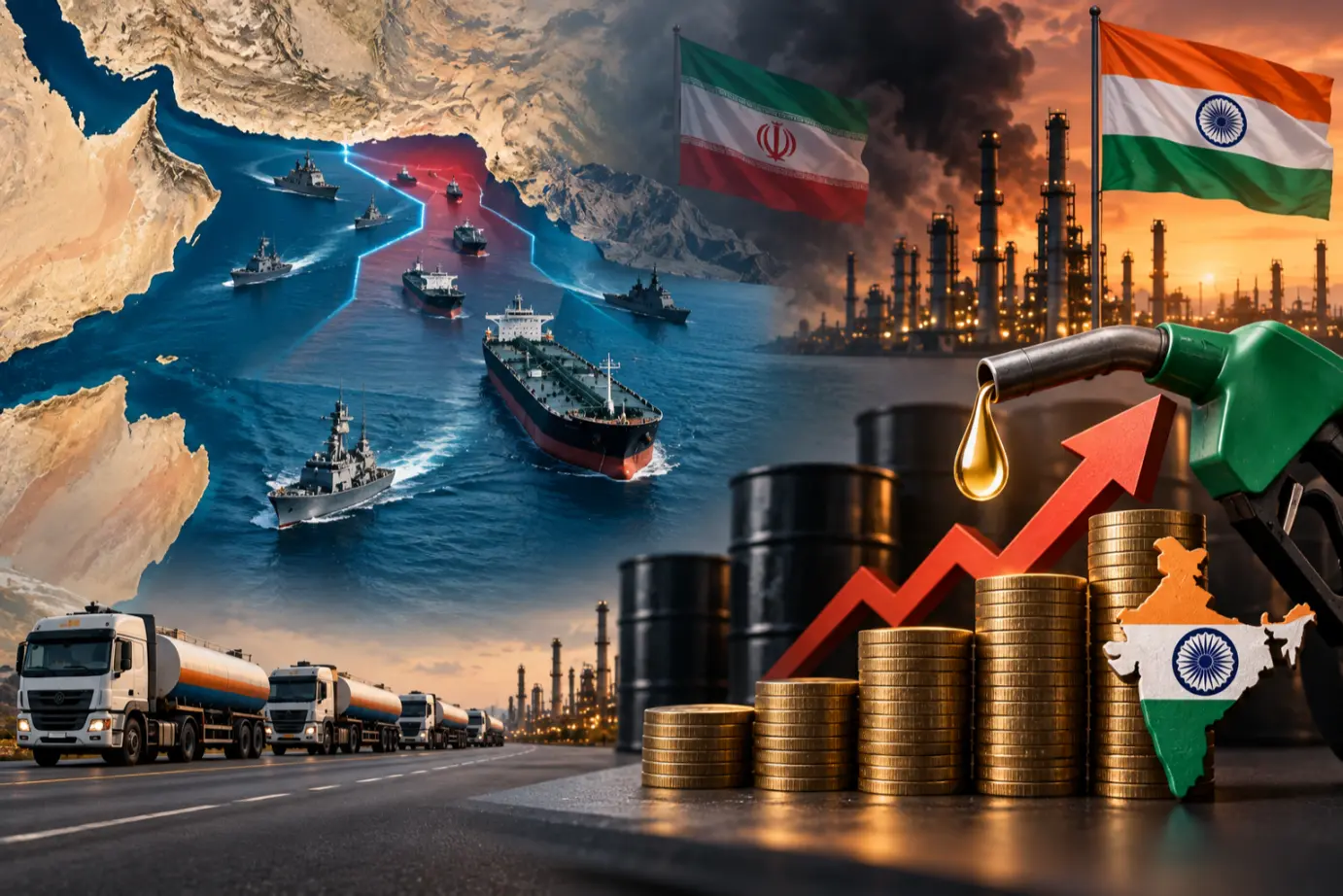
India incurred an estimated $22 billion in additional fossil fuel import costs during the six months after the US-Israel strikes against Iran, according to a new analysis by the Centre for Research on Energy and Clean Air (CREA).
The Strait of Hormuz crisis has pushed up the cost of crude oil, oil products and liquefied natural gas (LNG) for countries dependent on imports. India was among the countries that faced the biggest additional costs, ranking third globally behind the European Union and China.
According to the CREA analysis, fossil fuel importers worldwide paid around $330 billion more than expected during the six months following the strikes against Iran. The study compared actual fossil fuel prices with the prices that futures markets had expected in the 12 days before the conflict began.
India Among Biggest Hit By Fuel Price Shock
The European Union recorded the highest gross additional cost at around $78 billion, followed by China at $35 billion. India’s gross additional cost stood at approximately $22 billion.
However, the net additional cost for India across all fossil fuels was estimated at $14.4 billion. This was equivalent to around 0.38% of India’s GDP, or approximately 1.4 days of national income.
The figures highlight India’s exposure to disruptions in global energy markets, particularly because the country depends heavily on imported crude oil and LPG.
Crude Oil Imports Take Major Hit
India and China together accounted for a significant share of the additional crude oil import bill during the six-month period.
The study estimated China’s net additional crude oil cost at $31.3 billion, while India’s stood at approximately $20.5 billion. Together, the two countries accounted for around 40% of the total $131.2 billion additional crude oil cost recorded in the analysis.
The disruption also affected India’s LPG imports.
India’s LPG import bill during the six months was estimated at about $4.7 billion, with roughly $1.1 billion attributed to the additional cost caused by the energy price shock.
India’s LPG Imports Fell In March
The crisis had an immediate impact on India’s LPG supplies.
According to the CREA analysis, India’s LPG imports fell 49% in March, the first full month of the US-Iran conflict, compared with the average monthly volumes recorded during 2024 and 2025.
India subsequently increased supplies from other sources. The share of the United States in India’s LPG imports rose from 8% in February to 16% in March and 32% in April, helping replace part of the lost Gulf supplies.
Clean Energy Helped Reduce Import Costs
The study also highlighted the role of renewable energy in limiting the impact of the fossil fuel shock.
Clean power capacity added since 2020 was estimated to have saved importing countries around $36 billion in avoided coal, gas and oil imports during the first five months of the crisis.
China recorded the largest estimated savings at $7.9 billion, followed by Japan at $4.9 billion. India was also among the countries that benefited from lower fossil fuel import requirements because of clean power generation.
Why The Strait Of Hormuz Matters
The Strait of Hormuz is one of the world’s most important energy routes. Disruptions to shipping through the waterway have affected global oil and gas markets, increasing costs for major import-dependent economies.
For India, the latest figures underline the economic impact of prolonged energy disruptions. The $22 billion gross additional cost shows how quickly geopolitical tensions in a key energy corridor can translate into higher import bills for major fuel-consuming countries.